House Clearance Cobham Health and Safety Policy
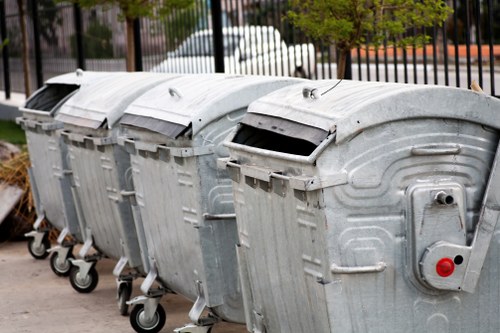 Scope and commitment: This Health and Safety Policy sets out the approach of House Clearance Cobham to maintain a safe working environment for staff, contractors and the public while delivering professional house clearance and rubbish collection services across our service area. Our objective is to prevent injury, ill health and property damage by applying proportionate risk controls, clear responsibilities and ongoing monitoring.
Policy statement
We are committed to identifying and managing health and safety risks associated with all aspects of our clearance service, including domestic clear-outs, bulky item removal, garden waste disposal and general rubbish removal. The organisation will provide adequate resources, training and supervision to ensure staff operate safely. All employees and subcontractors must comply with this policy and follow safe working practices when providing clearance and rubbish removal services.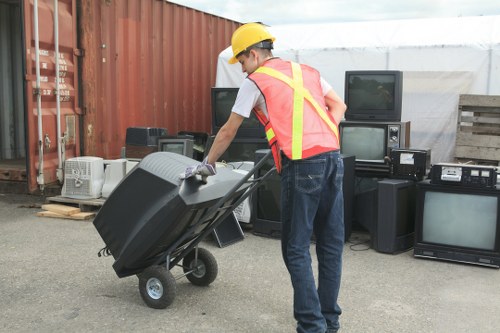
Applicability
This policy applies to every person engaged by the company: permanent staff, temporary workers and any contractors where we have control over operations. It covers premises, customer properties and vehicle operations during the delivery of house clearances, domestic rubbish removal and related clearance activities.Legal and good practice: We will observe relevant health and safety obligations and adopt industry good practice for clearance work, hazardous waste handling and vehicle operation. This policy is not a substitute for regulatory guidance but reflects our commitment to meet or exceed those standards while avoiding unnecessary legal detail on this public document.
Responsibilities
- Management — ensure implementation of the policy, allocate resources, carry out risk assessments and review performance.
- Supervisors — ensure safe systems of work are followed and provide on-site direction.
- Employees — follow instructions, use PPE, report hazards and incidents promptly.
Risk assessment and control
We undertake site-specific risk assessments before work begins on any clearance assignment. Assessments consider manual handling, sharps and glass, asbestos risk indicators, electrical hazards, hazardous fluids, rodent infestation and vehicle loading. Control measures follow the hierarchy of elimination, substitution, engineering controls, administrative controls and personal protective equipment.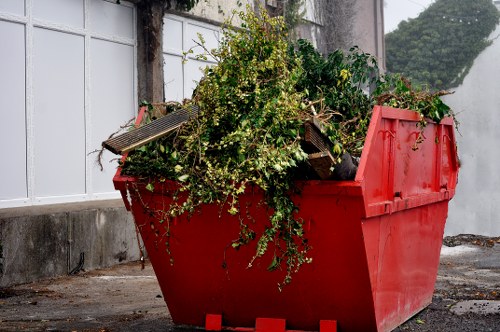 Safe systems of work: Standard operating procedures are in place for the most common tasks: internal house clearance, attic and cellar clear-outs, garage and shed clearance, and kerbside rubbish collection. Procedures include safe lifting techniques, two-person lifts for heavy or awkward items, use of trolleys and lifting aids, and secure stacking within vehicles to prevent shifting during transit.
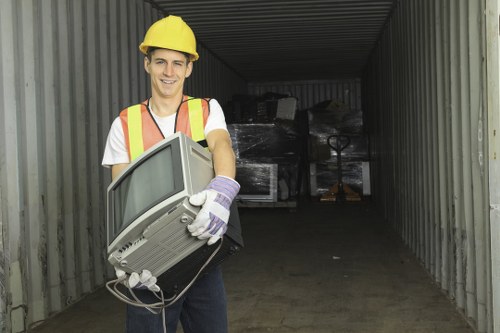
Personal protective equipment (PPE) must be worn according to task risk assessment. Typical PPE includes gloves, safety boots, high-visibility clothing, eye protection and respiratory protection where dust or fumes are anticipated. PPE is maintained, stored and replaced as necessary to remain effective.
Vehicle safety and transport: All vehicles used for rubbish removal and clearances are maintained and inspected regularly. Drivers and loaders must ensure loads are secured, weights comply with vehicle limits and that access to properties is managed to protect the public. Vehicles contain spill kits and basic first aid supplies for minor incidents.
Hazardous materials and waste segregation
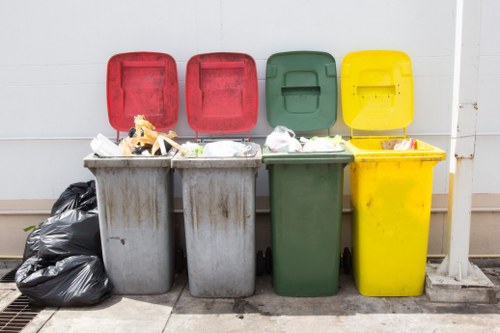
Hazardous items such as batteries, solvents, oils, asbestos-suspect materials and electrical items are identified and segregated. When hazardous waste is present beyond routine household levels, work will be paused and specialist contractors consulted. We maintain safe disposal routes and documentation for regulated wastes in line with proper environmental and waste carrier practices.Manual handling and ergonomics
Manual handling risks are reduced through planning, using appropriate equipment and rotating tasks. Training emphasises posture, grip and route planning. Staff are encouraged to flag recurring manual handling issues so that operations can be adapted to reduce strain and repetitive injury.Training and competence: All operatives receive induction training that covers safe working procedures, PPE use, hazardous waste awareness and emergency actions. Additional training is provided for driving and specialist tasks. Competence is assessed periodically, and refresher training is scheduled to maintain standards across the rubbish company service area.
 Incident reporting and emergency response: Incidents, near-misses and injuries must be reported promptly through established channels so that corrective actions can be implemented. Emergency procedures include first aid support, secure evacuation of a property when necessary and containment of hazardous releases. Serious incidents will trigger an investigation and review of risk controls.
 Monitoring, review and continuous improvement: Performance is monitored via site inspections, vehicle checks, incident trends and staff feedback. The policy is reviewed at least annually or sooner following a significant incident, change in work scope or legislative update. Continuous improvement is driven by practical feedback, new equipment and updated safe working methods for house clearances and rubbish removal activities.
Conclusion: This policy summarises the duties and arrangements that underpin safe and responsible delivery of house clearance services. By following these measures and promoting a culture of safety, House Clearance Cobham aims to protect people, property and the environment while providing efficient clearance and rubbish removal across its service area. All staff are required to read, understand and apply the policy in their daily work.
