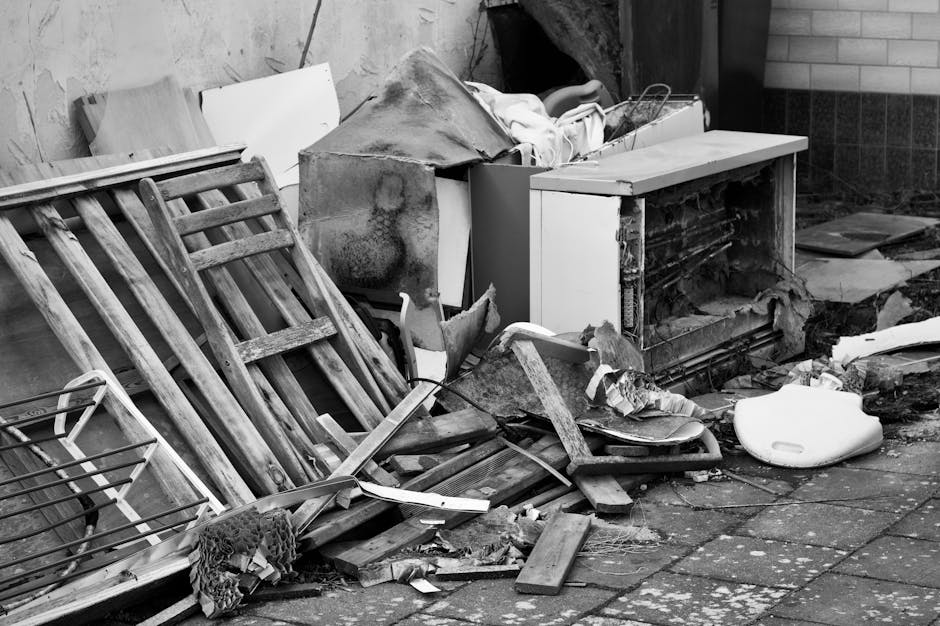
Large item rubbish pickup guide for Downside Cobham households
If you live in Downside, Cobham and you have a sofa that will not fit down the hallway, a wardrobe that has seen better days, or a mattress leaning awkwardly in the spare room, you already know the problem. Large items are awkward. They are heavy, bulky, and oddly time-consuming to deal with. This Large item rubbish pickup guide for Downside Cobham households walks you through the practical choices, the planning that saves hassle, and the small mistakes that turn a simple clearance into a long afternoon of dragging, lifting, and muttering under your breath.
Truth be told, bulky rubbish is rarely just "one item". It often becomes a cluster of decisions: can it be reused, does it need dismantling, who can lift it safely, and which option is actually easiest for your property layout? In a place like Downside, where access can vary from one home to the next, a little preparation goes a long way. Below, you will find a clear, local-first guide that helps you decide what to do, how to do it, and when to get help.
Quick summary: the best large-item pickup is the one that fits your access, your timeline, and the item's condition. If the furniture is reusable, disposal is not always the first move. If it is damaged, heavy, or awkward, a planned collection is usually safer and far less stressful. Simple, but worth saying.
- Check whether the item can be reused, repaired, or dismantled.
- Measure access before moving anything.
- Separate recyclable parts where practical.
- Book a pickup that matches the item size and lifting risk.
- Keep pathways clear on collection day.
Table of Contents
- Why large item rubbish pickup matters
- How large item rubbish pickup works
- Key benefits and practical advantages
- Who this is for and when it makes sense
- Step-by-step guidance
- Expert tips for better results
- Common mistakes to avoid
- Tools, resources and recommendations
- Law, compliance, standards, and best practice
- Options, methods, and comparison table
- Case study or real-world example
- Practical checklist
- Conclusion
- Frequently asked questions
Why Large item rubbish pickup guide for Downside Cobham households Matters
Large item disposal sounds straightforward until you are standing in a hallway with a bed base that will not turn the corner. That is usually when people realise bulky waste is not just about "getting rid of stuff". It affects safety, access, time, cost, and sometimes neighbour relations too.
For Downside Cobham households, this matters because homes can have different access challenges. Some properties have tight driveways, shared entrances, narrow side paths, or delicate surfaces that make dragging heavy items a bad idea. And let's face it, the last thing anyone wants is a scratched wall, a chipped step, or a strained back because a dining table looked lighter than it was.
It also matters because bulky items often contain mixed materials. A sofa may include timber, metal, foam, fabric, and springs. A wardrobe may have laminate panels, hinges, and glass. Sorting those properly can improve reuse or recycling potential. If you are trying to do the right thing, that kind of detail counts.
There is also the simple fact that large waste tends to sit around longer than planned. One item becomes two. Then a mattress gets added. Then the garage starts looking like a storage unit. You know how it goes. Acting early tends to make the whole house feel lighter, and oddly calmer too.
For households that are decluttering, moving, renovating, or dealing with an inherited property, a structured pickup approach can save a lot of friction. It is not glamorous, but it works.
How Large item rubbish pickup guide for Downside Cobham households Works
Most large item pickup jobs follow a similar pattern, even if the exact service differs. First, you identify the items. Then you decide whether they are reusable, recyclable, or simply waste. After that, you choose the collection method that fits the job.
In practical terms, the process usually looks like this:
- List the items you want removed, including size and approximate condition.
- Check access from the item location to the exit point, including stairs, corners, and door widths.
- Separate what can be separated such as loose cushions, drawers, or detachable legs.
- Choose a pickup approach based on urgency, quantity, and lifting risk.
- Prepare the collection point so the team can work quickly and safely.
- Confirm the timing and make sure someone is available if access needs unlocking.
That sounds almost too simple, but the quality of the outcome usually depends on preparation. A sofa collection that starts with a clear route and a well-measured item can be done neatly. The same sofa, trapped behind a cluttered landing and a stuck latch? Different story entirely.
There are generally three common routes for bulky waste in a local household context: reuse, private collection, or a general waste removal service. The best choice depends on what the item is and how quickly you need it gone. A clean chair might be suitable for reuse. A broken fridge probably is not. A heavy cabinet with no lift access may need more than a standard bin-day solution. You get the idea.
Key Benefits and Practical Advantages
Choosing the right pickup method for large items is not just about convenience. It has a few real, practical upsides that become obvious once the job is done.
- Less physical strain: heavy lifting is one of the fastest ways to turn a simple errand into an injury risk.
- Better use of space: clearing bulky items can open up a room, garage, loft, or spare bedroom in one go.
- Cleaner disposal decisions: reusable and recyclable parts can be separated more sensibly.
- Reduced disruption: a planned pickup is usually less chaotic than trying to improvise on the day.
- Safer access management: the right team will understand how to move items without damaging flooring, walls, or stair rails.
There is another benefit people sometimes overlook: peace of mind. When the item is no longer in the way, the whole space changes. You notice it in the room first, then in your head. Less clutter, fewer decisions hanging over you. Small thing, big effect.
If you are managing a property sale, preparing for tenants, or clearing after a refurb, speed and reliability matter even more. The better the pickup plan, the less likely you are to end up with a half-finished room and an extra weekend of sorting.
Who This Is For and When It Makes Sense
This guide is useful for a lot of households, not just people doing a big clear-out. In practice, large item pickup makes sense whenever an object is too large, too heavy, or too awkward for standard household disposal.
Typical situations include:
- Replacing an old sofa, armchair, or dining set
- Clearing a mattress or bed frame
- Removing broken wardrobes, cabinets, or chest of drawers
- Getting rid of garage clutter that has grown legs, so to speak
- Preparing a home for sale or rental
- Handling post-renovation bulky waste
- Managing household items after a downsizing move
It also makes sense if you live in a property where access is awkward. Downside homes can vary a lot in layout, and not every item can simply be carried out in one straight line. If you have stairs, tight bends, or shared entryways, you will want a pickup method that respects those limitations rather than fights them.
And if you are asking yourself, "Can I just leave this outside and hope it disappears?" - please do not. That tends to create problems, not solutions. A proper pickup is cleaner, safer, and far less likely to trigger a complaint.
Step-by-Step Guidance
If you want the smoothest possible large item pickup, a simple sequence helps. Nothing fancy. Just good planning and a bit of common sense.
1. Identify exactly what needs removing
Start with the obvious: what item, how many pieces, and what condition is it in? A "big chair" and a recliner with detachable footstool are not quite the same job. Likewise, an intact wardrobe is different from one already half dismantled. Write it down if you need to. Old-school, but effective.
2. Measure access before collection day
This is where many people get caught out. Measure door widths, stair turns, hallway pinch points, and any external gates or side paths. If the item may need partial dismantling, check whether the screws are accessible and whether the right tools are at hand.
3. Decide whether the item can be reused or recycled
If it is clean and functional, donation or reuse may be an option. If it is damaged but made of separable materials, some parts may be recyclable. If the item is heavily worn, contaminated, or unsafe, disposal is the better route. Honest judgement matters here. A sofa with a small scuff is not the same as one with a broken frame and sagging springs.
4. Clear the route
Move lamps, shoes, storage baskets, and anything else that might trip someone. Put pets somewhere safe. Open gates if needed. It only takes a few minutes, but it makes a huge difference. You will notice the difference immediately when the first heavy corner comes through the doorway.
5. Group items logically
Keep matching items together where possible: bed parts with bed parts, garden waste with garden waste, furniture with furniture. This saves time and helps the pickup team load the vehicle more efficiently.
6. Confirm any special requirements
Does the item contain glass? Does it require two-person lifting? Is there a tight lane or low beam? Say so early. Small details can change the whole plan. Better to mention them upfront than halfway through the job.
7. Be ready at the pickup window
If access needs to be opened or someone needs to confirm what goes and what stays, make sure that person is available. A collection delayed by a missing key or a missed call is a very ordinary headache, but still a headache.
Expert Tips for Better Results
After plenty of bulky-item jobs, a few patterns become clear. The smooth ones are not always the easiest items; they are the ones where the planning is tidy.
Tip 1: Break the job into small decisions. Do not try to solve reuse, disposal, lifting, access, and timing all at once. It gets messy fast.
Tip 2: If an item is borderline too heavy, treat it as too heavy. That little bit of caution saves backs. And egos, if we are honest.
Tip 3: Keep screws, brackets, and loose fittings in a labelled bag if you are dismantling something. It sounds obvious. It often gets forgotten anyway.
Tip 4: If you are clearing several rooms, stage items in a single safe area rather than scattering them. That makes the final load-out much quicker.
Tip 5: Photograph the item before removal if you are comparing disposal options or need proof of condition later. Handy, and strangely satisfying.
Tip 6: Choose timing carefully. Early collection windows can be easier because the day is quieter and access is simpler. By late afternoon, families, deliveries, and parked cars tend to make everything a bit more annoying.
Tip 7: In mixed-item clearances, ask how sorting is handled. A thoughtful approach can improve recycling and reduce unnecessary landfill use.
One small but useful habit: keep a "maybe" pile separate from the final disposal pile. It stops you from throwing out something useful in a rush. Happens more than people admit.
Common Mistakes to Avoid
Most problems with large item pickup are avoidable. That is the good news. The not-so-good news is that the same mistakes keep happening.
- Not measuring the route: a big item that fits in the room may still fail at the doorway.
- Leaving it too late: bulky waste can block access and create unnecessary stress if it is left until the last minute.
- Assuming one person can lift it: some items look manageable and are not.
- Mixing reusable goods with damaged waste: that can reduce the chance of reuse or sensible sorting.
- Forgetting about fragile surroundings: narrow halls, new flooring, and painted walls deserve protection.
- Not mentioning stairs or awkward access: this one causes plenty of avoidable delays.
- Dumping items outside in the hope of a quick fix: this can create neighbour issues and may be treated as fly-tipping in the wrong circumstances.
To be fair, these mistakes usually happen because people are busy. The item has been sitting there for weeks, maybe months, and suddenly the pressure is on. Still, a 10-minute check before the pickup can save an hour of frustration later.
Tools, Resources and Recommendations
You do not need a van full of specialist gear to deal with one bulky item, but a few tools help enormously.
- Measuring tape: for doors, stairs, item depth, and turning space.
- Work gloves: useful for grip and protection from splinters, staples, or rough edges.
- Blankets or protective covers: helpful for shielding floors and door frames.
- Screwdriver set or hex keys: for dismantling beds, wardrobes, or flat-pack furniture.
- Labels or tape: keep parts organised if an item is taken apart.
- Trolley or sack truck: useful for heavier items if the route allows it.
For households wanting a more comprehensive clear-out, it can also help to think beyond the single item. A garage packed with old furniture, broken storage, and leftover boxes may benefit from a broader house clearance approach. Likewise, a loft or garden space that has become an unofficial storage zone might be easier to tackle as a full clear rather than item by item.
Useful related services on this site include furniture clearance, house clearance, and waste removal. If your bulky item is part of a bigger job, those options can save a lot of back-and-forth.
If the item came from a renovation or building project, builders waste clearance may be more suitable than a general household collection. And if the problem is actually a garage packed with old stuff, garage clearance is often the cleaner fix.
Law, Compliance, Standards, and Best Practice
When dealing with bulky household waste, it is sensible to follow basic UK waste-handling best practice. You do not need to memorise legislation to make good decisions, but you do need to avoid careless disposal.
The most important principle is simple: use a legal and responsible route for waste removal. Fly-tipping, improper dumping, and leaving items where they obstruct public or private access can create real problems. Some items may also need careful handling because of materials, contamination, or sharp components.
Best practice usually includes:
- keeping waste on your property until a proper collection is arranged
- sorting reusable items away from damaged waste where possible
- making sure collectors can safely access the items
- being honest about item condition, especially for mattresses, broken furniture, or mixed-material pieces
- checking that any removal service is appropriately insured and operates safely
If a provider talks about safe loading, public liability, insurance, or recycling processes, that is a good sign. It suggests they take the job seriously rather than treating it like a rushed van shuffle. You want competence here. Quiet competence is best, actually.
There is also a practical household angle: clear communication avoids misunderstandings. If an item is fragile, too large for one person, or difficult to access, say so early. Good practice is not just about law; it is about reducing risk for everyone involved.
For more detail on responsible working standards and service expectations, you may also find health and safety policy information and insurance and safety details useful when comparing providers.
Options, Methods, and Comparison Table
There is no single "best" way to remove large household items. The right method depends on condition, urgency, access, and whether you want reuse or simple disposal. Here is a straightforward comparison.
| Method | Best for | Pros | Watch-outs |
|---|---|---|---|
| Reuse or donation | Clean, functional furniture or household goods | Extends the life of the item and may reduce waste | Not suitable for damaged, unsafe, or heavily worn items |
| Private bulky waste pickup | One-off large items, urgent collections, awkward access | Convenient, flexible, and often quicker to arrange | Cost varies depending on volume, weight, and access |
| DIY disposal | Small number of manageable items and available transport | Can work for people with time and the right vehicle | Heavy lifting, loading risk, and disposal logistics are on you |
| Full clearance service | Multiple rooms, garages, lofts, or whole-property jobs | Efficient for larger projects and mixed waste | Not always necessary for a single chair or mattress |
A useful rule of thumb: if moving the item feels awkward before you even start, it will probably be awkward during the move too. That is usually your cue to choose a safer method.
If the job involves furniture with potential resale or reuse value, it may be worth looking at furniture disposal only after you have decided the item cannot be reused. Disposal should usually be the last step, not the first assumption.
Case Study or Real-World Example
Imagine a Downside household clearing a spare room before guests arrive. There is an old wardrobe, a broken office chair, and a mattress that has been sitting upright against the wall for far too long. Nothing dramatic, but definitely enough to make the room feel smaller than it is.
The family starts by measuring the wardrobe and checking the staircase turn. They realise it will not come out in one piece, so they remove the doors, take out the shelves, and bag the fixings. The mattress is straightforward, but bulky. The chair is light, though awkward because of the base.
Instead of dragging everything out blindly, they group the pieces near the exit, clear the hallway, and make sure the front gate is open. The collection takes less time than expected because the access was planned properly. No scraped walls, no panic, no improvising with a screwdriver at the doorway. A pretty ordinary win, but a real one.
Now compare that with the same job done in a rush on a damp evening. Someone twists a back trying to angle the wardrobe through the landing. The mattress gets damp near the threshold. The chair ends up propped in the driveway while everyone argues about who said what. Small planning, big difference. That is usually how these jobs go.
The lesson is simple: bulky waste becomes much easier when you stop treating it as a single lift and start treating it as a short project.
Practical Checklist
Use this checklist before collection day. It keeps the job tidy and helps you avoid the usual little mishaps.
- Identify every item to be removed
- Measure doors, stairs, and external access
- Check whether the item can be reused or repaired
- Remove loose parts such as cushions, shelves, or drawers
- Label any fixings or dismantled components
- Clear the path from room to exit
- Protect floors and walls if needed
- Keep pets and children away from the working area
- Confirm the collection time and access arrangements
- Group bulky waste in one safe location
- Separate items that should stay from items that should go
- Have someone available if decisions may be needed on the day
Final pre-pickup sanity check: if you cannot lift one end safely, do not force it. That is the moment to step back and choose a better plan.
Conclusion
Large-item disposal does not need to be stressful, even if the item itself is a nuisance. With a little planning, a realistic view of access, and a sensible choice of pickup method, Downside Cobham households can clear bulky waste without the usual drama.
The best results usually come from simple habits: measure first, sort honestly, clear the path, and choose the right service for the job. Do that, and the whole process becomes far easier than people expect. Not effortless, maybe. But manageable. And that is often what matters most.
If your item is sitting there waiting for a decision, take that as your cue. A small bit of action now can make the rest of the week feel lighter, and that is no bad thing.
Get a free quote today and see how much you can save.
For broader household support, you can also explore home clearance, loft clearance, or flat clearance if your bulky item is part of a bigger tidy-up.
Frequently Asked Questions
What counts as a large item for rubbish pickup?
Usually, it is anything too big, heavy, or awkward for normal household disposal. Sofas, beds, wardrobes, tables, mattresses, and large appliances are common examples. The key issue is not just size, but how safely the item can be moved.
Can I leave a bulky item outside my home for collection?
Only if it is arranged properly and safe to do so. Leaving items out randomly can create obstruction, neighbour complaints, or disposal problems. It is better to confirm the collection plan first and keep the item secure until pickup day.
Should I dismantle furniture before collection?
If it is easy and safe to do so, dismantling can help a lot. Bed frames, wardrobes, and some tables are often simpler to move in parts. But do not force it if the fittings are stubborn or the item becomes unstable.
What if my item is still in decent condition?
If the item is clean, functional, and safe, reuse or donation may be worth considering. That often makes more sense than disposal. If it is only partly usable, decide whether repair is realistic or whether it is best treated as waste.
How do I know whether a pickup service is suitable for my home?
Think about access first. Narrow halls, stairs, steep driveways, and shared entrances all matter. If the item is hard to move or your property layout is tight, choose a service that understands awkward access and can plan accordingly.
Is furniture clearance better than general waste removal?
It depends on the item and the wider job. Furniture clearance is often the better fit when the main issue is bulky household furniture. General waste removal may be more suitable if you have a mixed load of different household items.
How far in advance should I arrange a pickup?
As early as you can, especially if the item is large, awkward, or part of a bigger clearance. The more planning needed, the more helpful it is to book ahead. That said, urgent collections can still be possible depending on availability.
What should I do with mattresses or broken beds?
Keep them dry, remove bedding, and make sure access is clear. Mattresses and bed bases can be awkward because of their size and shape, so good preparation helps. If the bed frame can be dismantled, that usually makes collection easier.
Are there risks in moving bulky items myself?
Yes. Strains, trips, damaged walls, scratched floors, and broken fittings are all common problems. If the item feels borderline too heavy or too awkward, it is smarter to pause and get proper help rather than take a gamble.
Can large items be recycled?
Sometimes, yes. It depends on the item and how it is built. Wood, metal, and certain other components may be recoverable, but mixed materials can make recycling more complicated. Separating parts where possible usually helps.
What details should I mention when requesting a quote?
Describe the item type, approximate size, condition, access challenges, stairs, parking, and whether it needs dismantling. The more accurate the information, the more useful the quote tends to be. A quick photo can also help in many cases.
What is the biggest mistake households make with bulky rubbish?
Rushing it. People often assume a large item is just a bigger version of normal rubbish, but it is not. Access, weight, and handling all matter. A few minutes of planning usually saves a lot of hassle later.
And if you are still staring at that sofa, wardrobe, or mattress and wondering where to begin, begin with the first sensible step. Measure it, plan it, and get it out of the way properly. That small bit of order makes a house feel more like home again.